

How COVID-19 Shook the Cactus League
COVID-19 brought sports to a standstill in the United States, including Major League Baseball spring training, an annual rite of spring. On March 12, Commissioner Rob Manfred cancelled the exhibition season in Florida and Arizona. That posed a challenge for GW students in Professor Mark Hyman’s “Business of Spring Training – Arizona” course.
On March 15, 18 students, most in the Master of Sport Management program, had been set to begin a week of site visits and interviews throughout the Cactus League. The trip to Arizona never happened. Instead, the class pivoted to a “Business of Spring Training Oral History Project.” Student teams researched and then virtually interviewed nine baseball industry and Arizona government officials to learn how the pandemic had touched their work and personal lives.
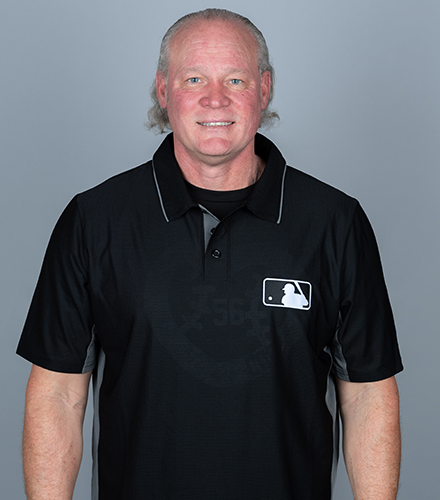
Ted Barrett, Umpire, Major League Baseball
"When they finally said [we’re] shutting it down, it came as a really big shock. I never imagined baseball would shut down.”
- Read Ted's Bio
Ted Barrett’s Major League Baseball umpiring career began in 1994. His first game was a start by Roger Clemens. He has since worked two perfect games, ejected manager Bobby Cox from his record-setting 132nd game and called balls and strikes for the 300th win for pitcher Greg Maddux. He was named a crew chief in 2013. In addition, he has been a member of umpire crews for four World Series.
Barrett has many interests beyond baseball. As a minor league umpire, he supplemented his income as a sparring partner for Mike Tyson, George Foreman, and Evander Holyfield. He is one of a few umpires to have earned advanced degrees; he is an ordained minister. Barrett is active in UMPS Care, the charitable foundation of MLB umpires which has helped more than 20,000 families and children in need. Barrett regularly visits children in hospitals and once celebrated a child’s adoption at a game in Tampa, Florida.
- Interview by Jacob Barker (MBA) and Sooyong Son (MBA)
March 31, 2020
It was business as usual; I did notice the crowds were a little bit lighter. Some people had been alerted to stay away from crowds, but the players didn't seem too concerned. I was of the understanding that outside it was not as big an issue, so even when the NBA [National Basketball Association] shut down, I thought we're still going to find a way to play. I think that was the attitude of the players, coaches and umpires. When they finally said [we’re] shutting it down, it came as a really big shock. I never imagined baseball would shut down.
I found out on the field. I was talking to one of the players and he was remarking how the virus was getting serious. When we get into spring training, we get in this little bubble where the rest of the world is blocked out and it becomes all about baseball. I wasn't even realizing the severity of the situation. Then we found out baseball was following suit the next morning.
[The] first person I told was my wife. After the game, I told her what the players were saying, and she said she had gotten word on her phone that an NBA player tested positive. She asked, “what would this mean for baseball?” I thought they'll shut it down for a little while, and then we'll resume spring training. We'll probably be back up on opening day.
I'm the vice president of our union. Immediately when I got home, we started having board talks. There are 76 members and [with] Triple A’s umpires, there are 18 associate members. We had to get the word out, and a lot of questions came up. Are we going to get paid? Are we gonna give up our per diem? As a union, we went into a crisis management mode.
As a crew chief, I have to stay in contact and just kind of keep their morale up and keep them ready. As a vice president of the union, I also work with MLB on training sessions, things that we do over Skype or Zoom. We get an MLB rules test emailed to us, and then we get together every Wednesday to discuss as a staff. [We’ve had] a really big change this year.
Relief pitchers that come into a game have to face a minimum of three batters. We had to go over all the scenarios. [Second,] there are new lineup things, position players that pitch have to be designated as two-way players, [as a] pitcher and position player. We have a lot of questions on how we enforce that. [Lastly,] we have a new wrinkle this year for us with replay, we're going to announce the replays, like the NFL and the NHL do. We'll announce what team is challenging and the result. This is very foreign to us, we’ve never had to speak into the camera before, so we're doing some [virtual] training with that. We're finding ways to stay busy and improve umpiring. As far as on the field stuff, the only way to practice calling balls and strikes is to actually get back there and do it. For us as umpires, that's what spring training is for. We can't practice the mechanics during the winter. Spring training is our practice. We're doing everything we can, off the field, to get ready for opening day.
It's frustrating for me because the gym [is] closed. Without that, I just walk on the streets. I listen to podcasts as I go. I've got weight training exercises that I do to get ready for the season. My dad has some weightlifting equipment in his backyard, and I'll go in there and train. It's hard when I go and see my mom and dad because I [usually] give them a big hug. Now I have to give them an air hug.
There are challenges with umpires all over. I'm worried about umpires that aren’t self-motivated to get out and work out. I'm worried about guys who aren't staying in-community. I'm worried guys might pick up some bad habits out of boredom. You know, going down bad trails. So, I’m trying to stay in-community through texts, through phone calls, general, “how you doing?”
When we get back on the field, I think there's going to be some real changes. [In our locker room,] we're there for a few hours before the game and a couple of hours after, so we eat [and] shower there. There's going to be a concern about hygiene and making sure things are [clean]. We shake hands a lot as we come out on the field, we may not be able to do so for a while. We're going to have to take some safety precautions.
We're going to get back out there and have a great season. [After] 9/11, we went back to work about a week later. I wasn't ready to get on a plane. I got on a plane, flew to Chicago, and we started [playing] baseball again, and I personally saw it heal the country. Baseball is resilient. It's not going away. All the players and the umpires, we can't wait to get out there and provide that for this country. It won't be long until a player is yelling at an umpire and an umpire throws [him] out of the game. Fans will be back in their seats screaming at me.
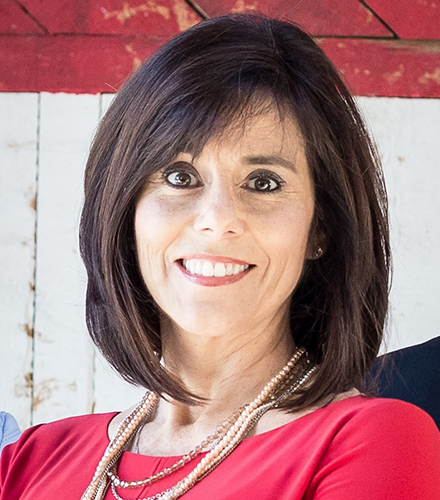
Bridget Binsbacher, Executive director, the Cactus League
"When you hear the news, initially you think, 'Oh my gosh, this can’t be happening.'”
- Read Bridget's Bio
Bridget Binsbacher is the executive director of the Cactus League. She has worked in the Cactus League for more than a decade and became its first female executive board member in 2012. She is also a Peoria, Arizona, city council member and the city’s vice mayor. Binsbacher has worked extensively in the financial industry with positions in operations management, sales management and business development. She is active with charitable organizations including the Alzheimer’s Association and the Peoria Chamber of Commerce. Her husband, Jon, is a fire captain and paramedic in the Northwest Valley of Arizona. They live in Peoria and have four children.
- Interview by Fred Baldasarro (Master of Tourism Administration) and Vicente Pina (MBA)
March 25, 2020
When you hear the news, initially you think “Oh my gosh, this can’t be happening.” I have been going to spring training games for many years. I live in the city of Peoria. I remember the Peoria Sports Complex was way back in 1994. I remember looking forward to Major League Baseball opening spring training there with the first two-team facility in spring training history — and I’m not talking about in the Cactus League, but in spring training history. It has become a regular part of my life and my family’s life, long before I ever got into it professionally.
What we were looking for at the time of the announcement that spring training was cancelled, was some direction from Major League Baseball and what they were going to do, and looking closely at our local team, the Arizona Diamondbacks, and what they were going to do. I think the overall message, without a doubt, as a league, is that we are all in this together. And that has been pretty much how it has stayed. There are varying models and structures from facility to facility, but overall, we’re working closely together, and the message is that we are in this together.
We are trying to be a conduit for the Cactus League going forward. We started Cactus League conference calls during the first week in March. We only had a few of our members on that initial call. And let me be clear: The Cactus League Association’s membership is made up of all our stadium and facility operators, our facility owners, and our facility tenants, which varies from facility to facility. It can be the teams, the municipalities that house the fields, it’s the [Native American] tribes* that support teams. Every model is a little bit different.
At the time of the second conference call, which was in mid-March, we were notified by Major League Baseball that the spring training season was being cancelled. This call was to say, “Ok, here is where we are, how is everyone doing?” We have another one scheduled for today, March 25. The Cactus League Association is going to be putting out a notice weekly as a place for our members to go to share information, contribute updates and take a temperature check on the current situation.
We will know when or if it is time to come back from Major League Baseball. We’ll receive notification via email before anything else happens. The Cactus League oversees spring training, but our 10 facilities and our 15 spring training teams all have different relationships with their respective parent teams. Some of them might get information before I do so we’re working very closely together and staying closely connected as a league to make sure that we’re all on the same page. It’s definitely difficult though to get everyone on the same page as far as receiving that information and responding to that information.
It is hard to calculate the economic impact at this point. We’re in a situation in which we are just in a holding pattern, wait and see. There is an economic impact to this situation for sure. Though we got through 19 games of 33 in our spring training season [about 60 percent of the season], we know that our numbers were right on target to meet last year’s numbers, and last year we had 1.7 million fans come to spring training. Our last economic impact study was in 2018, and we were in the middle of doing our 2020 economic impact study when spring training was cancelled.
We don’t know what the future impact is yet because Major League Baseball not only cancelled spring training, but also suspended the regular season. There is still a possibility that some things are going to happen in 2020, depending on how all of this unfolds. We’ll have to consider everything and then put that together with what we already have to determine what the outcome of 2020 looks like.
We understand that many fans look forward to Cactus League games and we sympathize with those whose plans were impacted. We are all in this together.
*Native American tribes in Arizona have been involved in the Cactus League in a variety of ways. For example, two of the local tribes in Arizona were involved in attracting two MLB teams from Tucson to reservation land in Scottsdale to build a new baseball stadium named Salt River Fields at Talking Stick. The name pays homage to the heritage of the Pima and Maricopa tribes.
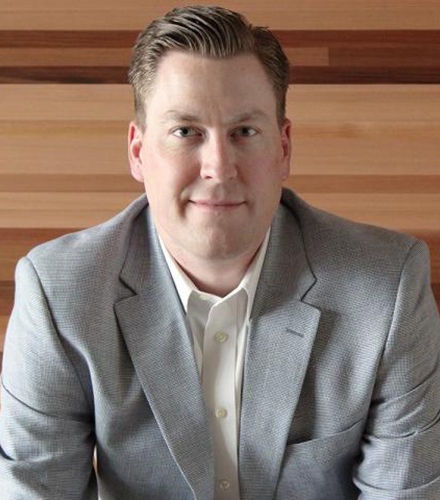
Scott Bush, CEO, Society for American Baseball Research
"No one is going to hit for a cycle tonight and allow us to showcase relevant statistics from our database. No one is going to turn a triple play.”
- Read Scott's Bio
Scott Bush has served as the chief executive officer of the Society for American Baseball Research (SABR) since 2018. A 2005 graduate of the University of Minnesota with a degree in sport management, he has extensive experience working in sports and business. Bush has also held roles with the Minnesota Timberwolves and Hubbard Broadcasting. Prior to joining SABR, he held positions with the Goldklang Group as both senior VP of business development and VP of marketing and business development for the Charleston RiverDogs. Since joining SABR, Bush has focused on generating revenue, cultivating new markets, and collaborating with a wide range of stakeholders.
- Interview by Zach Arden (MS in Sport Management) and Justin Koehn (BBA in Sport Management)
April 3, 2020
I am responsible for organizing our annual SABR Analytics Conference in Phoenix, Arizona. On March 11, I received a phone call from one of my MLB contacts informing me that their representatives would not be able to attend the conference due to health concerns surrounding COVID-19. The next day, that same contact broke the news that MLB pulled the plug on spring training. Our conference was scheduled to start March 13.
Many of the speakers and participants were already in Phoenix. We developed measures to proceed with the conference in a safe manner. We established a live stream for participants who were uncomfortable attending. We issued a stay-at-home advisory to everyone who registered, as well as partners. These efforts, along with employees’ recommendations to stay home, significantly reduced the number of participants from the 400 we normally welcome to the 24 in attendance Sunday.
If the conference had been scheduled the next weekend, we would have had to cancel or postpone. If it had been the weekend before, it would have proceeded as normal. We just found ourselves in a strange and tenuous 24-48 hours.
Looking forward, SABR is uniquely positioned to produce baseball content in the absence of an MLB season. Content-based sites, like Fangraphs, are struggling due to their focus on current baseball happenings. SABR is more research-focused and historical in nature. Due to this focus on the past, we have actually seen an increase in site traffic.
SABR has always been able to talk about the past very capably. What does impact us is the lack of baseball today to connect us to the past. No one is going to hit for a cycle tonight and allow us to showcase relevant statistics from our database. No one is going to turn a triple play. As any historian will tell you, it is best to connect the past to what is happening right now. Our inability to do that will undoubtedly matter.
As for membership, we are still in solid shape. We recently launched, “Stay Home With SABR.” The goal is to encourage baseball fans to become SABR members while also contributing to the global fight against the pandemic. We are planning to kick 50 percent of the new membership dues to a nonprofit called Heart to Heart, which provides personal protective equipment to folks on the front lines. It is not necessarily about driving membership as much as feeling a sense of obligation to do our part.
We have a weekly podcast called SABRcast hosted by Rob Neyer. Rob reports live every Monday night in a Zoom meeting, so viewers can ask questions. Overall, we want you to stay home and enjoy our content, but we also hope you will become a member.
Our chapters have shifted to virtual online video meetings. That goes against human nature and against the way SABR has been run in the past. I think this will benefit us. We can create a catalogue [of virtual meetings] that can then be shared and distributed across chapters. This is something many of us wanted to do prior to the pandemic. I believe our community is going to come out of this stronger for having to pivot and innovate.

Richard Justice,Columnist, MLB.com
"I thought to myself, 'Is it appropriate to write about the five best relievers in the American League or the Atlanta Braves bullpen at a time when the whole world is focused someplace else?'”
- Read Richard's Bio
Richard Justice was raised near Dallas. As a young child, he saw how important the newspaper was to the spread of news, especially during difficult times such as the assassination of President Kennedy in Texas. Living so close to Dallas, Justice frequented Cowboys’ games where he found himself more interested in those reporting the games than those playing them.
Justice attended the University of Texas at Austin, where his journalism career began with his work at the student paper, The Daily Texan. As a student, he also had the opportunity to intern with the Dallas Times Herald. After graduation, Justice worked as a reporter covering general news. His dream job was to cover sports, but this opportunity gave him a wider background and appreciation for other aspects of journalism.
Justice worked in general news before he got his first sports reporting position at the Dallas Times Herald covering high school sports and the Mavericks in their inaugural season. Afterward, Justice covered teams such as the Dallas Cowboys, Chicago Bulls and Baltimore Orioles in their respective cities. His career reached another high when he was hired at the Washington Post where he covered the Orioles and the Redskins, among other teams.
After spending 15 years at the Post, Justice went back to Texas to work at the Houston Chronicle, where he later became a sports columnist. Justice then accepted a position at MLB.com where he still works as a columnist. Although writing for an online audience is different from what Justice is used to, it allows for more freedom with his work and a constant access to readers.
- Interview by Kaitlyn Murphy (MS in Accountancy) and Alex Violagis (MS in Sport Management)
March 26, 2020
I was in Houston, Texas, preparing to go to Arizona when I got the word that spring training was suspended. By the time it actually happened, I wasn’t really surprised. It was clear how quickly the virus was moving and that it was a major public health issue for everybody involved. It’s disappointing but unfortunately, it was the reality of the world we live in right now. Soon after, I called my company’s travel agent and said, “I don’t think I’m going to Arizona”. I then realized all the work that we [MLB.com] would have to do in dealing with this.
The entire business model of Major League Baseball is based on playing games, so postponing the 2020 season would have a dramatic impact. We still have a website [MLB.com] that is up and running so the next questions you have to ask yourself is, what content can we provide? And what is considered appropriate? We have this virus that has led to the entire world being under siege. Is it appropriate to write about baseball in order to give people an outlet? I thought to myself: is it appropriate to write about the five best relievers in the American League or the Atlanta Braves bullpen at a time when the whole world is focused someplace else? That's the balance we try to deal with. For instance, today would’ve been opening day, so we are replaying a memorable game for all 30 teams. I just watched the Pirates win a postseason game at home. Earlier this morning, I watched Aaron Boone hit a home run against the Red Sox. Our hope is that it gives people an outlet and engages them with the sport again.
In a weird way I’ve been doing what I always do, in that I’m just trying to find content to provide, but now I’ve stretched it a little more. I wrote an essay about the first time I was ever in a major league clubhouse. Currently, I’m writing a piece on the greatest upset of opening day history, which was the 1989 Orioles beating Roger Clemens and the Red Sox, and I’m also writing a piece on five people “outside the box” I think ought to be in the Hall of Fame.
The commissioner said yesterday, I don’t think we are going to have a 162-game season. So, I think baseball is going to look at creative ways to finish the season. Does that mean more double headers or bigger rosters? And how quickly is it going to take to ramp up? We could play a hundred different scenarios. Scott Boras, the agent, has a plan to play all 162 games and it involves a Christmas day World Series at a neutral site. Perhaps at ballparks that are either in warm weather climates or have roofs like Milwaukee. More importantly, ballparks where you can play postseason games. That being said, it would take something away from the sport by not having home fans. I think it's going to come down to when is it safe to play and how quickly does it take players to get back to being physically ready to play.
I think everybody is going to be affected one way or another and I think that just like all of us, we are trying to get our minds around what is happening right now. I think every player will be impacted in some way or another. One concern is how players are going to have a hard time staying ready to play because the facilities and gyms are shut down. It’s going to be a process of trying to work through until everyone feels safe. The play will definitely be impacted and players could get hurt from a quick ramp up.
Every team in the MLB central office has committed to keeping the workforce intact through the end of April. So, if you don’t have any games, you aren't going to have any revenue. So, can teams withstand that? We are going to see stresses on finances unlike we have seen in a very long time and that’s why you would like to play as many games as you can. Then again, the calendar is going to be a byproduct of the virus and currently, we don’t have a handle on that right now.
I would hope that we are playing by July 1, and one scenario that has been mentioned is starting the season with the All-Star game as a celebration of the sport. What I saw after 9/11 is that people craved the sport. People craved doing something that felt normal again and I think the New Yorkers would tell you that the Yankees played a role in helping the city heal. In 2017, Houston was savaged by a hurricane, and I can tell you for a fact that the Astros didn’t make the city any drier or make homes any safer, but the city embraced the team and the team embraced the city. It was one of those times that you could spend a couple of hours each day thinking about something other than your own problem. I believe there is going to be a hunger to play games and to do things that we’re accustomed to doing in good times. The commissioner said it himself in a letter that’s all-over social media, stating how baseball has been a big part of people’s lives and how we are going to start back up again once this country returns to normalcy. Baseball is going to be one of those things that we all feel is important, and it's going to play a role somewhere.
I think in a lot of ways, this is professional sports' finest hour. Tons of baseball players and teams are getting involved in their communities. I think George Springer of the Astros committed $100,000 to pay stadium workers and relief workers. This is the time you show that you are a good citizen of the community. Everybody talks about it and it’s in every team's mission statement. There are people now that need help. My youngest daughter is an elementary school teacher and it's not reading, writing, and arithmetic that she worries about, but food programs, Meals On Wheels, and nutrition programs. These professional teams are helping out in all those areas and can continue to help out. It's part of living in this country.
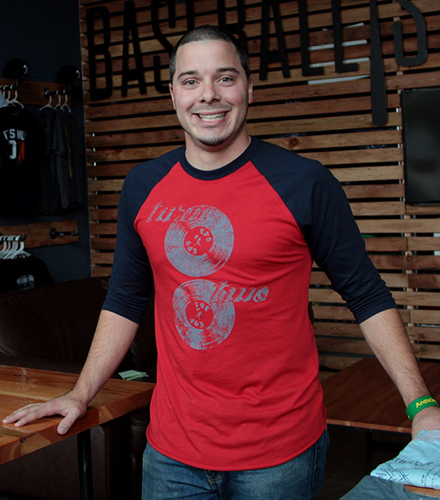
Jonathan Jwayad, Chief Operating Officer and Co-Founder, Baseballism
"Everyone wants a brand with a heartbeat, a brand with a mission, and an authentic brand, and we try to do that every single day."
- Read Jonathan's Bio
Jonathan Jwayad is chief operating officer and co-founder of Baseballism, a Portland, Oregon, based retail company. A native of Oregon, he graduated from the University of Oregon with a degree in political science and government. Baseballism started as a youth baseball camp founded by Jwayad and former teammates on the Oregon club baseball team. The former teammates created Baseballism as a brand focusing on baseball themed apparel. Baseballism has ten brick-and-mortar locations, 27 micro stores, and an online store.
- Interview byVaishwan Dave (MS in Sport Management) and Lesley Fatica (MS in Sport Management)
April 1, 2020
When I first heard spring training was postponed, I was boarding a plane to Arizona. It was an early morning flight and I had been thinking about everything that had happened. The NBA just shut down and my gut was telling me they were going to cancel spring training. Once I got off the plane, I saw the announcement that spring training was going to be suspended and the start of the regular season was postponed. I knew it was coming but it was still a gut punch. There was business to take care of in Scottsdale, so I continued my trip, but things weren’t the same.
Baseballism acted quickly. We started coming up with a clear plan assuming there would be no MLB and very limited retail. We predicted a 20 percent dip in online sales because even though people were going to be home, we weren’t sure how many were going to lose their jobs, what consumer confidence would be like, [and the effect of] the stock market crashing. In order to stay solvent, we created three levers. The first was cuts [layoffs and expenses]. The second lever was traditional debt. The third lever was investment to buy primary equity to keep us afloat. We laid off around 50 retail associates and 12 headquarters employees. Everyone was understanding of the situation, it was no one’s fault.
When we began making cuts and closing the doors, we didn’t pull the lever completely. We slowly started to shut doors in order to have more runway to stay solvent because every day that you’re open matters. There’s one part of you that says, “should we shut all these stores down? Are we adding to the pandemic by staying open?” The other side reminds you we have jobs to protect and everyday matters. We closed San Francisco first because the whole city shut down and then slowly closed the rest, with Scottsdale being last. It was a big hit there because the stores in Scottsdale generate $1 million dollars in the month of spring training.
With the stores closing, the managers consolidated the inventory we wanted sent back to headquarters. We diversified the revenue by taking city specific products you could only get in stores and making them available on our website. We’ve never done that to this scale and customers are excited because maybe they want the Chicago-inspired shirt but live in Alabama. Our online sales are currently up 20 percent despite our predicted 20 percent dip. When we realized we would be going all online, we had to come up with a new marketing strategy. Business 101 is ramp up our marketing spend since people are at home, so how can we get in front of them more often? Instead of advertising, we decided that content is king. We focused on viral videos, a challenge or something engaging. Immediately we initiated a plan to create unique content every day on social. So far that plan has been successful and even better, it’s free.
In addition to regular merchandise, we wanted something for the cause. How can we help? The design team created COVID-19 T-shirts that have a home plate inside of a heart and says, “stay home.” All of the proceeds are used to purchase masks in China to be brought to the U.S. and donated. Everyone wants a brand with a heartbeat, a brand with a mission, and an authentic brand, and we try to do that every single day. We knew that we could leverage our manufacturing relationships in China to get masks made. Once we secured that and we secured the design, we launched it and it's been awesome.
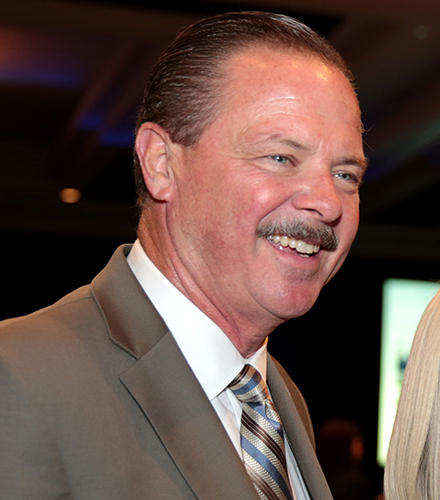
W.J. "Jim" Lane, Mayor, Scottsdale, Arizona
"The uncertainty of the situation is quite difficult on people as we continue to work through this."
- Read Jim's Bio
W.J. “Jim” Lane is serving his third term as mayor of Scottsdale, Ariz. His first term began in January 2009. Mayor Lane has also served on the Scottsdale City Council, the Scottsdale Fire & EMS Advisory Committee, and the Scottsdale Paradise Valley YMCA Board of Management.
Mayor Lane moved to Scottsdale from New Jersey in 1973, working as an Arizona CPA for 20 years. He has also owned and or operated businesses in construction, aviation, and technology over a thirty-year career. He holds a B.S. in accounting from Saint Joseph’s University. He and his wife Joanne have three adult children and seven grandchildren.
- Interview by Shannon Kearney (MS in Sport Management) and Bailee Weisz (BBA in Sport Management)
March 31, 2020
I was informed of spring training’s cancellation on March 12. Leading up to that moment, Scottsdale City Hall had been in conversation with the Giants about possibly moving their opening series to Scottsdale Stadium. This followed the City of San Francisco’s announcement that gatherings of no more than a thousand people could take place. The Giants had already begun communications with other teams regarding schedule changes and city-specific COVID-19 social distancing recommendations. Hosting the games in Scottsdale emerged as a reasonable alternative to not being permitted to host in San Francisco. Once MLB made its decision to cancel all spring training games, conversations about the Giants moving their games to Scottsdale became moot.
From the perspective of spring training in Arizona, the entire situation moved fairly quickly. The Cactus League Organization served as the first line of communication. Information was passed along to representatives in Scottsdale tied with the Cactus League. City Hall had representatives from the Giants managing and translating what was happening in California as well as with MLB to determine the impact on Scottsdale.
With the Arizona governor’s stay-at-home order, we are living through unprecedented times. COVID-19 has effectively put all baseball operations in Scottsdale on hold, including Triple-A.
Scottsdale’s fields play host to groups beyond spring training. Since the Centers for Disease Control (CDC) recommended to cancel gatherings of 50 or more people for at least eight weeks, there is an immense amount of uncertainty. We are also unsure of efforts necessary to slow transmission person-to-person and to avoid a peak demand that would overtax the healthcare system. We hope these measures have their desired effects so that after the peak we get to the point where we bring the city, state, and country back to economic life.
This entire situation can be fairly isolating for our population, so we have decided to keep our parks open, with limited interaction according to physical distancing, we believe it is necessary for people to go outside. We have the kind of environment that makes it the perfect time of year in Arizona to get outside.
There are many aspects of this crisis that will affect the speed of recovery. One of the biggest factors will be the number of businesses that survive challenges associated with the shutdown. For local businesses, there is a lot of personal capital that is wrapped up [in businesses that are shuttered]. As for the citizens of Scottsdale, thousands have lost their jobs overnight, [job losses] will worsen due to the restrictions on travel and the operations of non-essential businesses. We are making all reasonable accommodations given physical distancing. The uncertainty of the situation is quite difficult on people as we continue to work through this.
Moving forward, our mode of operation is to survive this shutdown period. We want to make sure that the funds that have been made available by the government are getting to the right businesses and to the individuals, so that they can survive to work another day. Our priorities are essential functions like water supply and safety. Then we can discuss ideas for boosting tourism after this is over. We will absolutely consider the consequential effects of rules we put into place to protect our community, while trying to slow down the spread of COVID-19.
I would love for MLB to come back and start playing ball. For nearly 30 years, it has been a very good partner. I may be biased, but I believe Scottsdale is one of the premier locations for a spring training team.
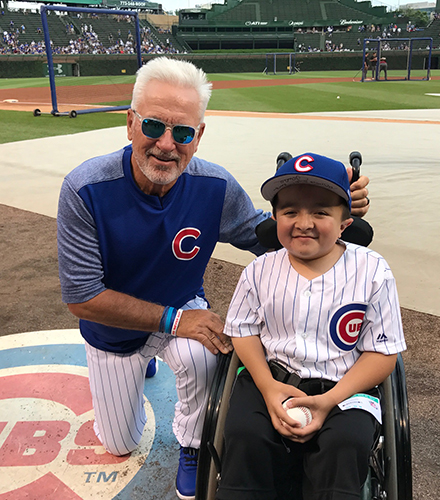
Joe Maddon, Manager, Los Angeles Angels
"I’ve tried to demonstrate leadership by becoming more active on social media. We don’t need any more negative conjecture; we need positive conjecture."
- Read Joe's Bio
Joe Maddon was born in Hazleton, Penn., on Feb. 8, 1954. He graduated from Lafayette College in 1976, playing both baseball and football for the duration of his college career. Maddon then began his minor league baseball career as a catcher, playing in the California Angels system for four seasons. Maddon began his managerial career with the Angels organization in 1981, where he managed the Class A Idaho Falls Chukars. His MLB coaching career began in 1994 with the Anaheim Angels. Maddon worked under five managers, serving two different stints as interim manager. He was a part of the World Champion 2002 Angels.
In 2006, Maddon became the manager of the Tampa Bay Devil Rays, inheriting the lowest payroll team in MLB. In his third year as manager 2008, the Rays won the American League East division and advanced to the World Series. In 2008, Maddon was awarded the American League Manager of the Year and Major League Manager of the Year awards.
Maddon became the manager of the Chicago Cubs in 2015 and won the National League Manager of the Year award. In 2016, the Chicago Cubs won the National League Central division and posted their first 100-win season in more than 80 years. Maddon and the Cubs won the organization’s first World Series championship in more than 100 years, defeating the Cleveland Indians. After the 2019 season, Maddon rejoined the Los Angeles Angels organization as manager. Maddon currently works with his charity organization Respect90 to help people struggling with homelessness across the country.
- Interview by Thomas Luther (MS in Sport Management) and Tom Simpson (MBA)
March 24, 2020
I was in spring training at Diablo Stadium [in Tempe, Ariz.,] when I heard the season would be cancelled. The first person I contacted was my wife Jaye. My mom had been ill in Florida, so next was probably my brother Mark who lives near her, and then my sister Carmine back in Hazelton, Penn. I always think about family first, making sure everybody is well, under control, and realize we’re going to get through this and that it shall pass.
When we first heard, we got the players together in our main locker room — the same place we had been just three weeks before, welcoming everybody, talking about the season, building momentum, when everything was going in the right direction. There is a great line I like to follow: “Never deny the truth of bad news.” At that meeting, we talked through the situation and understood we have to be flexible. We have to communicate accurately, not speculate and sensationalize. The more I could keep my players calm and levelheaded, the more likely we’ll come out well on the other side.
One concern is the championships, the playoffs and everything that you’ve been striving for — you can never minimize that. That’s really important — that’s why we do this. People are missing turning on the TV and seeing sports. I like that MLB didn’t get started and are planning to play a truncated season, but I always like to put an end date. You put an end date when you build in a schedule. Then you move it backward from there. Whenever I build a schedule — I’ve built a schedule for years — you begin with the end, then you move back from there and then eventually you make some sense of it.
I’ve been busy supporting my charity organization Respect90. Part of the current challenge is the inability to raise funds, which we are always seeking. We had a good event at the Orange County Rescue mission at the end of January. We recently did the Respect Ball where we raised some money. We’re now working on our funds to distribute meals. Do you distribute to first responders, folks in the medical industry who respond to the people on the street, or those who are really struggling financially? We’re debating how to address that challenge. We are all about homelessness. That’s one of the original purposes of the foundation.
I’ve tried to demonstrate leadership by becoming more active on social media. I want to put out a positive message. We don’t need any more negative conjecture; we need positive conjecture. The leadership component is thinking about how we can have a more pragmatic and calm approach to this pandemic. Always be straight up with everybody — [but] don’t forget to compose a plan. We know what’s going on is not good, but we believe it will get better in a reasonable amount of time.
I’m a fan of the minor leagues — I spent a lot of time there. I never played in the major leagues but I did play in the minor leagues for four seasons. Then I was a minor league coach, manager, coordinator, and scout for 13-14 years before I got to the big leagues. These [small-town teams] across the country provide invaluable benefits and give them something to look forward to.
It’s all about getting the major leagues rolling again. Then making sure that we’re helping subsidize the minor leagues. It’s the life blood of the major leagues. It's not like football or basketball where guys come out of college ready to play in the major league. Now almost 100 percent of the time guys coming out of college or high school or junior college aren’t ready to play major league baseball. We need these players to evolve and become better at their craft. It's not a fast dance like these other sports; it’s a slow dance. I’m an advocate of the minor leagues. They are a big part of our future.
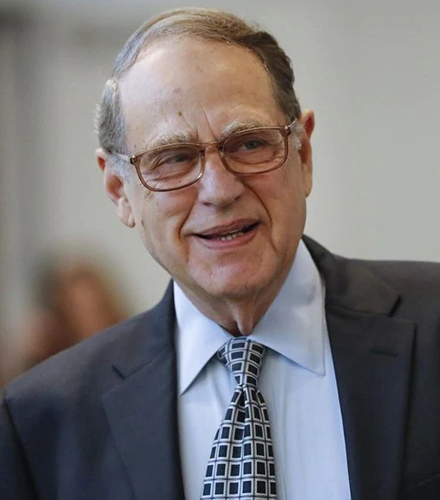
Jerry Reinsdorf, Owner, MLB’s Chicago White Sox and NBA’s Chicago Bulls
"In my lifetime, I can't think of anything that hit suddenly like this or [that] is as uncertain as this."
- Read Jerry's Bio
Jerry Reinsdorf is a CPA, lawyer and owner of MLB’s Chicago White Sox and the NBA’s Chicago Bulls. A native of Brooklyn, New York, he was in the stands at Ebbets Field in April 1947 when Jackie Robinson debuted in a Brooklyn Dodgers uniform. Reinsdorf earned his bachelor’s degree from the George Washington University and his law degree from Northwestern University.
Reinsdorf purchased the White Sox in 1981 and the Bulls in 1985. He quickly brought success to both Chicago franchises. The Bulls established one of the NBA’s all-time dynasties winning six titles in eight years (1991-1993 and 1996-1998). Reindorf’s Bulls sold out every game from November 20, 1987 through Michael Jordan’s retirement in 1999. The White Sox also saw results, advancing to the playoffs in 1983 for the first time in 24 years. They would also make the playoffs in 1993 and 2000, before finally capturing the World Series trophy in 2005. This championship, the White Sox’ first since 1917, made Reinsdorf only the third owner in the history of North American sports to win a championship in two different sports.
In recognition of his ownership efforts, Jerry Reinsdorf was a 2016 inductee into the Naismith Memorial Basketball Hall of Fame. Reinsdorf has brought more than just championships and sports fame to Chicago. He has been involved in extensive charitable work throughout the city. In 2011, he received a Jefferson Award for “Greatest Public Service Benefiting the Disadvantaged” for his philanthropic efforts through the Chicago White Sox and Bulls Charities.
Reinsdorf currently resides in Chicago with his wife of over 60 years, Martyl. His son, Michael, is the current president of the Chicago Bulls.
- Interview by Ethan Cuccarese (BBA in Sport Management) and Ryan Riffenburgh (MS in Sport Management)
April 9, 2020
This pandemic is certainly unlike anything I can remember in all my time in Major League Baseball. The only thing that would be reasonably close would be the baseball strikes in ‘81 and ‘94. They’re only similar in that we stopped playing. We always knew that sooner or later they’d be settled, and we’d come back and play. This is totally different because we don’t know how this whole pandemic thing is going to end. We don’t know if or when there’s going to be a vaccine or a cure,[ or ]when it’ll be safe to resume baseball. In my lifetime I can't think of anything that hit suddenly like this or is as uncertain as this.
I don’t have a specific recollection as to where I was when spring training was officially cancelled. This was building up and you could sort of see it coming. It wasn’t like somebody dropped a bomb and it started out of nowhere. For the longest time I was wondering what impact [the pandemic] was going to have on attendance. Really the only thought I had was, “How long is this going to last?” The future is really unknown.
My daily routine has completely changed. My normal routine would be to go into my office either at White Sox park [Guarantee Rate Field] or the Bulls practice facility. I’m not even in Chicago at the moment. I stayed in Arizona because the weather is nicer, and I might as well be somewhere warm enough that I can go outside from time to time. It’s pleasant but when it gets to be 100 degrees here and 75 degrees in Chicago, I’ll go back to Chicago. In the meantime, most of my time is devoted to what we're doing as a result of the pandemic.
We have a lot of questions that still need answers. Are we going to play a season? How do we deal with our season ticket holders? What about our sponsors? We’re in constant communication with our business partners, talking to our sponsors, trying to see how we can help them. We want to see if there are ways we can help them without playing baseball games or basketball games. There aren't many times in a day where I said, “boy, am I bored.” I’m pretty much getting through a full day. I’m working full-time, I’m just doing it on the phone and the computer. The only thing is that being out here in Arizona, I’m three hours behind [MLB offices in New York] and two hours behind Chicago. My day ends early. Once I get to about four o’clock here, I know I can’t reach anybody back East so I can have relaxing evenings.
We’re definitely talking to season ticket holders and trying to do everything we can for them. Every season ticket holder has an account executive. We’re constantly communicating with them, telling them what we know — which is not much. We’re sort of focusing on unwinding a business rather than running a business. We’re having to think ahead to what happens next year. The basketball season starts late October. We don’t even know if we’ll be able to have a training camp. Baseball season starts in February [2021] with spring training. So, there are a lot of unknowns we’re thinking about instead of pleasant things like winning ball games.
I miss the competition. Just seeing the games and, hopefully, winning more than we lose. We’re very optimistic about this year and now it’s disappointing that we’re not able to play. I miss working with the people that I interact with on a daily basis because I really enjoy them. They're just wonderful, wonderful people. I also miss being out of the house!
I’m sure there will be opportunities that will arise out of this because no matter what happens, somebody always figures out a way to make money. Companies [will be] coming to market with testing kits or selling masks. I personally am not interested in any new opportunities because I’m too old to worry about it. There are a lot of clever people out there though.
In terms of baseball operations, rosters are frozen. That’s not a big inconvenience. The biggest inconvenience is we’re just not playing. When things start up again, we’ll be able to make trades, sign free agents, do all the things you’d normally do.
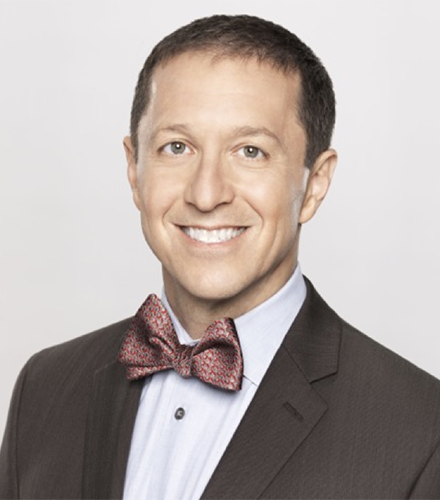
Ken Rosenthal, Senior Baseball Writer, The Athletic
"I have covered sports for the past 25 years and have never seen the sports world so quiet. Sports are an outlet for people in distress and now that’s gone."
- Read Ken's Bio
Ken Rosenthal is the senior baseball writer for The Athletic. He started his baseball sports journalism career at the Baltimore Sun in 1987 and stayed until 2000. During this time, Rosenthal won the Maryland Sportswriter of the Year five times. In 2000, Rosenthal began writing for The Sporting News, where he wrote columns for their magazine and website about baseball. In addition to The Athletic, Rosenthal works for Fox Sports, where he is seen commenting on regular and postseason games as an on-field reporter. He also is a commentator for the MLB Network. For his outstanding TV work, Rosenthal was recognized with Emmy Awards in 2015 and 2016.
- Interview by Perry Cancilla (MS in Sport Management) and Briana Nardone (MS in Sport Management)
March 31, 2020
COVID-19 has created a lull in the sports world. This spring training was different for me because for the first time in my 30 years of marriage my wife had accompanied me to Arizona. I was in my hotel room writing a story when the news about the basketball player [Rudy Gobert] broke. I knew right then the sports world was in for a seismic shift.
Instead of having my days full of interviews, shows, reporting, and writing, I have to find other ways to stay busy. I have focused most of my time on The Athletic, but we are slowly starting to tape shows on MLB Network via Zoom. As for Fox, I will start appearing on their show, but the volume of shows is not there. Lately I have focused on writing featured stories. My most recent stories are about a former player [Victor Martinez] who is now a horse owner going into the Kentucky Derby and a former MLB player that will be playing over in Japan this season. These are things that I will be focusing on until updates occur. An update happened today in Toronto with the announcement of no public events until June 30th.
I have covered sports for the past 25 years and have never seen the sports world so quiet. Sports are an outlet for people in distress and now that’s gone. My profession of sports journalism has seen a massive amount of unemployment. Careers are at stake, but right now health is paramount, and I don’t want to write a sad story about sports writers.
Another update is the agreement between MLB and the MLBPA [3/31/2020], and that is something of an accomplishment considering they’ve been at odds for a while. COVID-19 provided urgency to reach a decision. Like any labor agreement there’s give and take, but in this situation, there were not going to be winners. There are only losers. The players got what they wanted: service time. No matter how short or if the season is played, the players will get the number of days that they earned the previous season. Service time is what gets them salary arbitration and free agency. One source told me that’s worth $800 million in a single season. However, they suffered on the salary front because Commissioner Rob Manfred has the right under the Uniform Player Contract to withhold salary in the event of a national emergency. The players ended up with $170 million to be divided up among the 1,200 men on the 40 men rosters. The money received by the players will be kept in a cancelled season and retained as an advance in a shortened season, with their salaries pro-rated. The most contentious point of the agreement was the amateur draft. MLB at one point wanted to cancel the draft and combine the 2020 and 2021 classes. The players negotiated that MLB can reduce the draft to as few as five rounds as well as defer the bonuses the players sign.
Gaining the trust of the organizations and players has afforded me the opportunity to gather the information that I receive. I believe there are four things that have given me that trust: (1) be a good listener, (2) be fair, (3) prove yourself on a daily basis in your work to show how serious you are, and (4) be effective at communicating what you are trying to communicate. A big challenge with trust is that it comes and goes with people, not because of necessarily things I might do but because they might get ticked off at me for something, this does happen quite frequently, but ultimately if you have that trust and then they are going to come back. Because they’re going to realize, okay, they might have been upset about something that maybe I said or wrote but I’m not coming from a place where I have an agenda. My only agenda in a perfect world should be to serve the reader in a maximum way. It doesn’t always work like that. Sometimes I’m played without knowing it. I try to not let it happen, but I am not going say it’s never happened. Before I make any information public, I like to have multiple sources with confirmation. There are certain situations where I take one and go with it because that source has direct knowledge of the situation. I don’t do that often because it goes against journalistic principles.
Throughout my career I’ve had the opportunity to interview a multitude of people. The three most surprising interviews were: Dusty Baker, Manny Machado, and Carlos Correa. Dusty’s was a few years ago and it was a rambling one-hour conversation. He was out of baseball and I wanted his opinion on different issues in baseball. When I finished the interview, I thought I had nothing, but once I transcribed the interview, I realized how direct he was. Machado’s interview that aired on Fox Sports during the 2018 NLCS sent waves throughout the industry. The interview was focused around his on-field incidents during his career and then he gave the “I’m not Johnny Hustle” answer. I put the full context out there and I believe Fox aired most of the interview. He was being honest but got crushed for it. Finally, we have Correa’s interview from spring training. I knew he was going to have some strong things to say about the criticism that he and the Astros were getting, especially from Cody Bellinger. I didn’t know he was going to go as far as he did. It was surprising, electric, and quite a thing.
Special Thanks
- Amy Rosewater, UMPS CARE charities
- Rick Vaughn, Respect 90 Foundation
- Scott Reifert, Chicago White Sox
- Isol Morales, Office of the Mayor, Scottsdale, Arizona
Learn More About the MS in Sport Management Program at the GW School of Business