

Decision Sciences Research
Research in the Department of Decision Sciences
How do business leaders respond to real-world challenges—such as natural disasters, cyber threats, power grid disruptions and volatile consumer behavior? Even more, how they could reach better decisions? That is the focus of robust research in the Department of Decision Sciences. The department is recognized for its rapid, high-impact research in data analytics, optimization and operations management. These timely, practical insights make complex findings easy for business leaders and policymakers to respond with confidence in today’s tech-driven world.
The department’s scholarship shapes academic programming, including the school’s Business Analytics Program and the M.S. in Artificial Intelligence for Business. It launched GW’s first—and one of the first in the D.C. area—initiatives advancing research and education in analytics, and continues to break new ground through its expertise in artificial intelligence. GW Business is also among the few U.S. business schools advancing both research and degree programs in project management.
Research Institutes & Events
Since 2007, the Institute for Integrating Statistics into Decision Sciences (I²SDS) has partnered with centers of excellence across GW to advance data-driven decision-making. Led by Department Chair Refik Soyer, the institute collaborates closely with the GW School of Engineering and Applied Science and the Department of Statistics within the Columbian College of Arts and Sciences.
Biennially since 2009, the GW Department of Decision Sciences has organized the international Symposium on Games and Decisions in Reliability and Risk. The event brings together researchers from engineering, economics, finance, and statistics to present novel applications of game and decision theory in risk analysis.
Research Highlights
From smart cities to health care, defense to data mining, GW’s Decision Sciences faculty use data to analyze past performance, predict future trends and recommend effective responses to complex challenges. Known for its pioneering, cross-disciplinary work, the department takes an innovative approach to analyze data to uncover optimal solutions.
Explore how our faculty are advancing this work through impactful research across a range of industries and applications:
Whether developing tools to manage Alaskan wildfires, strategies for evacuating injured soldiers from the battlefield or mathematical models for drone deliveries of overdose-reversing drugs, Miguel Lejeune’s generates optimal solutions to complex mathematical optimization problems. His expertise in stochastic programming and optimization under decision-dependent uncertainty has produced award-winning research. He is the recipient of high-profile research grants, including from the National Science Foundation, the Office of Naval Research, the Army Research Office and IBM. Lejeune is an associate editor for top journals in his field, among them Operations Research, INFORMS Journal on Computing, Mathematical Programming, Computational Optimization and Applications and Open Journal on Mathematical Optimization. He serves on the advisory board of OMEGA. He is also a fellow of the Washington Academy of Sciences.
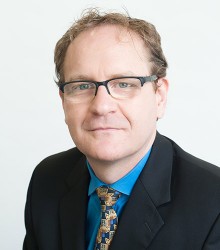
Professor of Decision Sciences, Electrical and Computer Engineering, Engineering Management and Systems Engineering

Interim Chair, Department of Decision Sciences
Refik Soyer is recognized for his research in Bayesian statistics, decision analysis, stochastic modeling, reliability analysis, and time series analysis. He applies these methods to real-world problems, including medical fraud detection, accelerated life testing, adversary risk analysis and maintenance modeling.
The work of Young Hoon Kwak advances the theory and practice of project and program management, particularly for complex, large-scale and transformative projects. His work is focused on the engineering and construction sectors, as well as infrastructure and the built environment. Against that backdrop, he addresses some of the most pressing challenges facing modern project control and delivery, including effective decision-making in transportation infrastructure projects, the role of social media in shaping large-scale project outcomes, the implications of price-based competition for workplace safety and the strategic application of standardization and modularization in capital projects. He has received grants from the National Science Foundation, the Project Management Institute, the Construction Industry Institute and the IBM Center for the Business of Government, underscoring the rigor and real-world impact of his work. He serves on the editorial boards of the leading project management journals; he is editor-in-chief of the Journal of Management in Engineering and department editor for IEEE Transactions on Engineering Management.

Associate Professor of Decision Sciences

Assistant Professor of Decision Sciences
The operations management research of Yuan Guo generates insights—with practical applications—into retail strategy, including platform design. She has looked at second-hand platforms for fashion goods and the phenomenon in which customers purchase alternative products when their first choice is out of stock. She has also examined how to optimize revenue, pricing, and assortment in environments where customer’s decisions depend on real-time system congestion, such as with food delivery platforms and 3D printing services.
Janne Kettunen develops decision and risk analysis methods to generate novel managerial and theoretical knowledge. His research is grouped into two main focus areas: project management, especially new product development, and data-driven policy analysis. His research addresses problems such as optimal project portfolio selection and project portfolio risk estimation. He also studies entrepreneurial pivoting, forest harvesting, procurement auction scheduling, electricity market contracting and pandemic mitigation.

Associate Professor of Decision Sciences

Associate Professor of Decision Sciences
Zhengling Qi, an Amazon Scholar, generates data-driven decision-making methods that leverage advances in machine learning and artificial intelligence (AI). His research heavily focuses on reinforcement learning, causal inference and Large Language Models (LLMs). His recent LLM research includes improving model reasoning capabilities through reinforcement learning, enhancing in-context learning via calibration, and advancing preference optimization algorithms to better align models with human feedback. By operating at the intersection of statistics, computer science and operations research, he applies advanced methodologies to a variety of practical domains. Those include pricing, inventory control, mobile health, medical studies and human-machine interaction.